

To the casino
Ask it to search the deposit and processor records using the payment reference, amount and time. Request the matching wallet entry, the reason it cannot be credited or the return reference if it was sent back.
Missing deposits
Find the payment reference and ask the casino to match it to your wallet entry. A bank or payment app showing success does not, by itself, explain an unchanged casino balance.
Keep this to one deposit: the amount and currency, destination, time and reference. Check whether the payer record is a completed debit or a pending authorisation before describing what is missing.
| Record | Check | What remains unanswered |
|---|---|---|
| Pending card charge | Is it an authorisation or a posted transaction? | Whether payment completed, was cancelled or still needs the issuer's status check. |
| Completed bank or payment-app debit | Amount, currency, beneficiary and transfer reference | Whether the merchant or processor matched that payment to the casino account. |
| Casino deposit history | Request ID, status and wallet currency | Whether a matching entry was credited, rejected or returned. |
| Current casino balance | Relevant wallet and transactions since the payment | A balance alone does not show the deposit's individual ledger entry. |
| Refund or return entry | Payer account, amount, currency and date | Whether the money returned to you rather than crediting the casino wallet. |
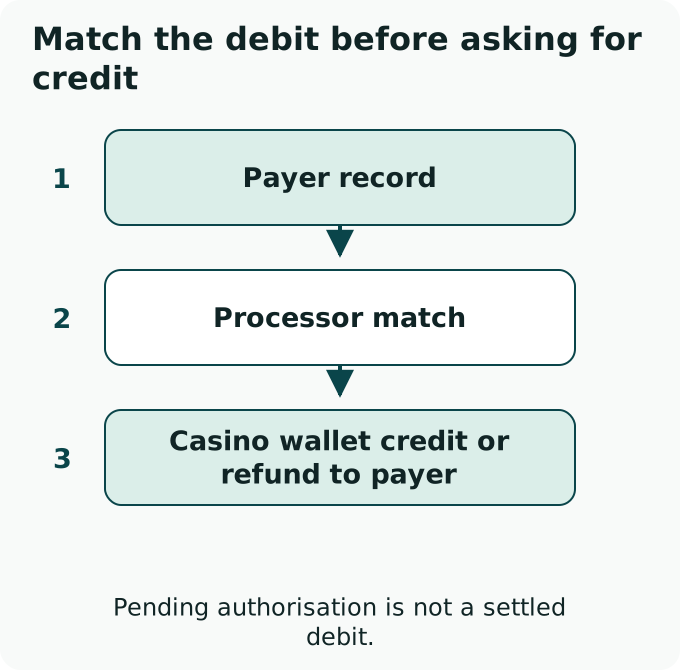
For a card payment, ask the issuer whether the charge is pending or posted. Chase's credit-card explanation describes a pending charge as not yet fully processed; it can reduce available credit before appearing as a posted balance item. Your issuer's own record should tell you the status of this transaction.
For a bank transfer or payment app, open the individual transaction receipt. Save its status, destination and reference rather than only the reduced account balance. A payer-side confirmation supplies evidence for a trace; the casino still needs to connect it to the merchant record and your wallet.
An initial declined payment with no debit is a different problem. If a pending authorisation remains, ask the issuer and merchant about that hold. Do not present it as a completed casino payment until its status is clear.
Keep both the payer amount and requested casino deposit amount. Record any conversion or difference instead of assuming the two figures are identical.
Save the transaction time and casino request time. A posting date can differ from the original request date; label each clearly.
Save the beneficiary or merchant shown on the receipt and the casino account ID privately. If the name differs from the casino brand, ask which processor it identifies.
Use the bank or payment-app transaction identifier for that rail. For Pix or UPI, keep the reference shown on the actual payment receipt. For crypto, keep the hash and exact network.
Save the deposit request and any pending, failed or completed entry. If none appears, state that clearly and request the ledger search result.
Ask it to search the deposit and processor records using the payment reference, amount and time. Request the matching wallet entry, the reason it cannot be credited or the return reference if it was sent back.
Ask whether the payment completed, where it went and whether a return is recorded. Request a trace or confirmation the merchant can use. Keep that answer connected to the original reference.
Ask which processor reference links your payment to the casino request and who will investigate it. A message saying 'provider delay' still needs an identifiable transaction and the next action.
Open the transaction on the explorer for the network actually used. Compare the asset, destination address and confirmation status with the casino's deposit instructions. If that asset requires a memo or tag, check that too. A token name alone does not establish network compatibility.
Stake's deposit help says unsupported coins or deposits on the wrong network will not credit its balance, and that confirmations are needed before credit. It separately directs EOS or XRP memo/tag problems to live support for recovery assistance. Those instructions concern Stake; another operator's recovery options need its own answer.
If the transfer is confirmed to the expected details but the wallet entry is absent, send the hash and network to the casino for matching. If a detail differs, identify the mismatch and ask about recovery. Do not repeat the transfer to make the first one appear. The network and fees guide covers those mechanics more fully.
The BDM Bet Pix complaint from Brazil illustrates an outcome limit. An intermediate player update said the casino had confirmed the deposit through its provider. The case summary later described the money arriving, but the final public player entry did not clearly establish the casino-wallet credit.
In a Parimatch deposit complaint from India, the player directly reported resolution and funds received in the bank. The final wording left the exact credit-versus-refund sequence ambiguous. Neither example supplies a universal deposit-crediting time.
For your payment, specify where the money appeared. A bank refund, released authorisation and casino wallet credit close different records. Keep the casino's confirmation beside the actual entry that resolves the missing amount.
Match the ledger entry to the original payment and amount. Record any conversion or fee explanation and check that a duplicate was not added.
Match the return to your bank or app record. Record it as a refund, with any remaining difference still open.
Ask the issuer to confirm the hold ended. A released hold is different from a posted payment followed by a refund.
Keep the reference and unanswered merchant or wallet question in one complaint. Another deposit will not explain the first payment.
Build the missing-deposit complaintThey can be describing different records. Ask the payer service for the payment destination and reference, and the casino for the merchant match and wallet status. Keep the labels attached to the party that supplied them.
Include the deposit history and payment reference. The current balance can change after bets or other transactions, so the individual ledger entry is more useful for matching this deposit.
Resolve the first payment's status before relying on another attempt. A second payment creates a separate debit and reference; it does not establish what happened to the original deposit.
For supported assets, network selection and transfer details.
Keep the payer receipt and casino response in one chronology.
For money the casino says it sent to you, rather than an incoming deposit.