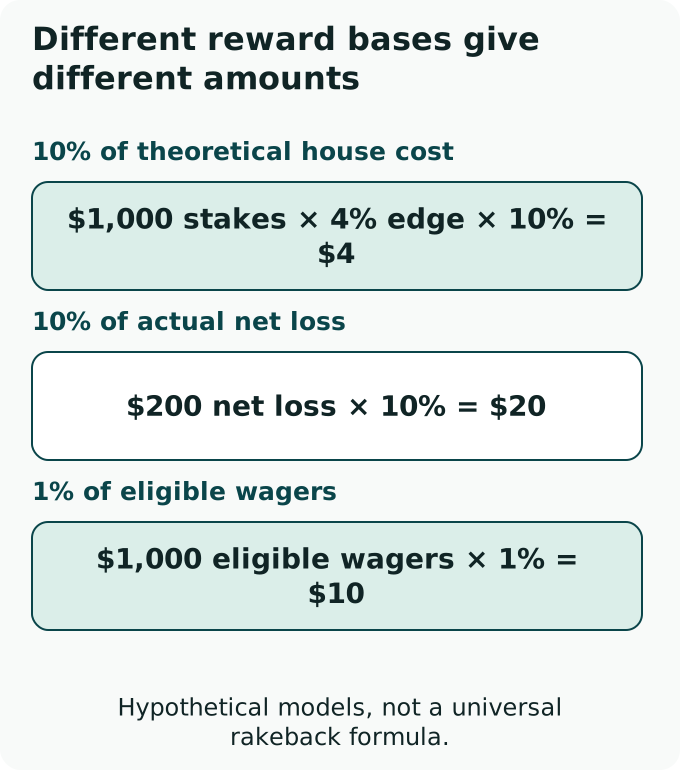

Rakeback is a loyalty mechanic that returns a small fraction of your wagered volume back to your wallet, regardless of whether you won or lost the underlying bets. It is the favourite advertised perk of crypto-first casinos because the headline percentage looks generous and the actual yield is much smaller than the marketing suggests. This entry shows the formula, computes a real example, and explains where the marketing rate diverges from the effective yield.
Snapshot. Rakeback is wagered volume × house edge × rakeback rate × VIP multiplier. A 10% advertised rakeback on a 96% RTP slot is roughly a 0.4% net edge on your wagered volume, not 10% of your deposit. The clawbacks, caps, and tier resets matter more than the headline number. The brands on my feedbacks index advertise rates from 5% to 20%; the effective yield across them is much narrower.
The formula behind every casino rakeback claim
Rakeback is not a discount on your losses. It is a percentage rebate on the theoretical house margin that your wagered volume produces, paid back to you regardless of session outcome. The full formula is:
rakeback = wagered_volume × house_edge × advertised_rate × vip_multiplier × (1 - clawback) × eligibility_coefficient
Each variable matters:
- wagered_volume is the total amount you bet, win or lose. A $100 deposit played through ten times is $1,000 wagered, not $100.
- house_edge is
1 - RTP. A 96% RTP slot has a 4% house edge. Rakeback applies to this margin, not to your nominal stake. - advertised_rate is the percentage on the marketing page. 5%, 10%, 15%, 20% depending on the brand and the VIP tier.
- vip_multiplier is the tier scaling factor. Bronze tier on most brands is 1.0x; diamond/elite tiers can reach 2x-3x on the advertised rate.
- clawback is the percentage of rakeback that the brand reclaims under specific conditions (bonus violation, account inactivity, withdrawal before tier cycle close). Often missing from the marketing.
- eligibility_coefficient is the game-class weighting. Slots usually contribute 100%, table games 10-25%, live dealer 5-10%, sportsbook 0-50%.
The formula is the same across every brand. The headline rate is the smallest part of the equation.
A $1,200 wagered rakeback example with real yield
A concrete walkthrough beats any abstract explanation. Take the modal welcome cycle on a crypto-first casino: $300 deposit, 4x wagering on the deposit (not the bonus), 10% advertised rakeback at bronze tier.
The walkthrough.
- Deposit: $300
- Wagering required: 4× = $1,200 wagered volume
- Slot RTP: 96.0% → house edge 4.0%
- Theoretical house margin on $1,200 wagered: $48
- Advertised rakeback rate: 10%
- VIP multiplier (bronze): 1.0×
- Clawback: 0% (assume no bonus violation, no early withdrawal)
- Eligibility coefficient (slots only): 100%
- Rakeback paid back: $48 × 0.10 × 1.0 × 1.0 × 1.0 = $4.80
On a $1,200 wagered volume, the 10% advertised rakeback returns $4.80. That is a 0.4% net rebate on wagered volume, or 1.6% on the original $300 deposit. The marketing did not lie. The marketing also did not tell the full story.
If the brand pays the rakeback weekly and the player runs the same $1,200 cycle for 12 weeks, the rakeback compounds to roughly $57.60 over a quarter. Useful, not life-changing.
Marketing rakeback rate vs effective yield in my index
The brands on my verdicts index advertise rakeback rates between 5% and 20% on bronze, scaling up to 30-40% on the highest VIP tiers. The effective yield (rakeback divided by wagered volume) tells a different story.
| Brand pattern | Advertised rate | Effective yield (bronze) | Effective yield (diamond) |
|---|---|---|---|
| Crypto-first slot-heavy (Stake-style) | 5-15% | 0.2-0.6% | 0.8-1.5% |
| Crypto sportsbook hybrid | 10-20% | 0.3-0.8% | 1.2-2.0% |
| Crypto casino with token rewards | 20-30% on token | 0.5-1.0% in token value | 1.5-3.0% in token value |
| Fiat brand with cashback dressed as rakeback | 3-10% on losses only | variable, depends on net loss | same, scaled by tier |
The effective yield is what matters when comparing brands. A 20% advertised rate on a brand with low slot RTP and high clawback can return less than a 10% advertised rate on a brand with high RTP and clean payout discipline.
Where casino rakeback hides a cap or a clawback
The headline percentage is the marketing. The fine print is where the actual value lives. Six common levers reduce effective yield without changing the advertised rate.
Weekly cap. Rakeback above a fixed dollar amount per week (e.g. $500) does not pay out. Hits high-volume players first.
Per-game-class weighting. Slots 100%, table 25%, live 10% means a player who likes blackjack gets a quarter of the slot player's rakeback.
Tier reset. Some brands reset VIP tier monthly. A player who climbed to diamond can drop back to bronze if the monthly wagered volume threshold is not maintained.
Clawback on withdrawal. If you withdraw before the rakeback cycle closes, the unpaid rakeback is forfeited. Most common on weekly cycles.
Token volatility. Rakeback paid in a casino's own token is subject to the token's market price. The "20%" can be worth 5% if the token dumps before you cash out.
Bonus-blackout. Rakeback often does not apply to wagered volume during a bonus phase. The bonus wagering and the rakeback wagering are separate buckets.
A brand that surfaces all six levers transparently in its loyalty page is doing player-protection well. A brand that hides three of them in section 8.x of the terms is using the rakeback as a marketing hook, not as a real edge.
How loyalty refunds differ from direct cashback programs
The two terms are often used interchangeably. They are not the same.
Rakeback. Paid on wagered volume regardless of session outcome. You can be net up and still receive rakeback. The formula is wagered × edge × rate. Linear in volume, independent of result.
Cashback. Paid on net losses only. If you broke even or finished up, cashback is zero. The formula is max(0, net_loss) × rate. Non-linear and asymmetric.
Cashback is better than rakeback for the player who runs a losing session, because the rebate is capped at the actual loss. Rakeback is better for the high-volume player who is roughly breakeven, because the rebate is paid on volume rather than on losses. Both are loyalty mechanisms; they reward different play patterns.
The six-axis scorecard placement for loyalty yields
Rakeback sits on the bonus-math and brand-vibe axes of my editorial scorecard, not on its own axis. Two cross-effects matter:
- Bonus math. The advertised rakeback rate is part of the welcome cycle math when present. A brand with a 100% welcome bonus, 40x wagering, and 10% rakeback is mathematically different from the same brand without the rakeback. The deficit calculation on the verdict page accounts for it.
- Brand vibe. A brand that surfaces the rakeback formula openly (including caps and clawbacks) scores higher on vibe than a brand that prints "up to 30% rakeback" with no formula and no eligibility detail.
The other four axes (cashier behaviour, support quality, KYC handling, wallet timeline) are independent. A high-rakeback brand can still freeze withdrawals or run hostile KYC; see the KYC entry for the document-side risks that no amount of rakeback offsets.
Cross-reference from real verdicts. The Stake verdict carries an instant rakeback model paid in stablecoin with a published tier ladder. The Shuffle verdict ships a weekly rakeback with a different tier reset cadence. The Gamdom verdict ships a hybrid (instant fragment plus weekly settlement). All three are mathematically rakeback; the player experience differs by payout cadence and clawback discipline.
Frequently asked questions on loyalty yield calculations
The questions below come from reader emails over the testing window.
Is rakeback really worth the wagering volume it requires?
For most players, the rakeback alone is not enough to flip the expected value of a session positive. A 0.4% effective yield on a slot with a 4% house edge means the player still loses ~3.6% of wagered volume on average. The rakeback narrows the gap, it does not close it. The player who treats rakeback as the primary reason to wager more is making the math worse, not better.
Why is the advertised rate so much higher than the effective yield?
Because the advertised rate is a percentage of the house edge, not of your wagered volume. A 10% rakeback rate on a 4% house edge slot returns 0.4% of wagered volume. The brand can publish "10%" plainly while the actual rebate is much smaller. The math is in the formula above; the marketing chooses to emphasise the multiplier rather than the product.
What is the difference between instant and weekly rakeback?
Instant rakeback pays a small fragment immediately after each settled bet, usually visible as a "balance refund" line in the cashier. Weekly rakeback accumulates across the cycle and pays at a set time (often Monday 00:00 UTC). Instant is easier to track and harder to clawback; weekly is easier for the brand to cap. Both are mathematically equivalent for a player who never withdraws mid-cycle.
Calculation and comparison questions
Does rakeback apply to table games and live dealer?
Usually at a reduced eligibility coefficient. Slots 100%, table games 10-25%, live dealer 5-10% is the typical ladder. The brand publishes the coefficient table in the loyalty section. A brand that lists slots only and excludes everything else has a narrower rakeback than the headline suggests.
Can I lose rakeback I have already earned?
Yes, through clawback on early withdrawal before cycle close, through bonus violations during the wagering phase (see the [max bet rule entry](/glossary/max-bet-rule/)), and through VIP tier resets if the brand runs monthly cycles. The earned-but-unpaid rakeback is the most common loss mode. The earned-and-paid rakeback is yours and cannot be clawed back retroactively except in fraud cases.
How do I compare rakeback across brands fairly?
Three numbers, in this order. First, the effective yield (rate × house edge × eligibility) on the games you actually play, not on the marketing-friendly games. Second, the cap (weekly or monthly dollar ceiling, if any). Third, the clawback conditions in the loyalty T&C. A brand with a 5% advertised rate, no cap, no clawback, and 100% slot eligibility is mathematically better than a brand with a 20% advertised rate, a $500 weekly cap, full clawback on withdrawal, and 25% slot eligibility.
Related entries on Casino Feedback
- Wagering requirements covers the bonus-side volume requirement that rakeback often runs alongside.
- VIP traps covers the loyalty tier dynamics rakeback hides inside.
- Sticky vs cashable bonus covers what a welcome bonus actually pays after wagering.
- The real cost of bonuses essay on the blog runs the full deficit math the rakeback partly offsets.
Questions on a specific brand's rakeback math go to smartseokings@gmail.com. Replied within twenty-four hours.
- Reverse withdrawal explained - the cashier-side trap that directly undermines rakeback gains when cashout is held past payout window.
- BetFury casino review - BFG dividend pool as a working example of token-based rakeback in practice.
- 1xSlots casino review - 40x welcome wagering that rakeback runs against; which earns more over 30 sessions.
- Fairspin casino review - TruePlay staking yield as the closest structural alternative to flat-rate rakeback.
- Withdrawal guide - cashout timing strategy that interacts directly with rakeback accumulation cycles.
Calculate the rakeback value against the expected loss before depositing. Rakeback does not eliminate the house edge, it rebates a fraction of it. The cashback rate, the calculation base, and the payout schedule are the three numbers that determine whether the offer improves the expected outcome or is marketing framing.