

You are still in the game
Stop autoplay, leave the game and end the session before making another deposit. Put distance between the recovery thought and the next payment.
Gambling behavior
Chasing losses means continuing or returning to gambling with the aim of recovering money already lost. The defining feature is the recovery target: an earlier loss starts deciding what you bet, deposit or do next.
In this illustrative situation, you decide on a session budget and a stopping time.
The budget is spent, but stopping now feels unacceptable because the earlier loss is still unrecovered.
You make another deposit, raise the stake or keep playing past the stopping time to try to get back to the starting amount.
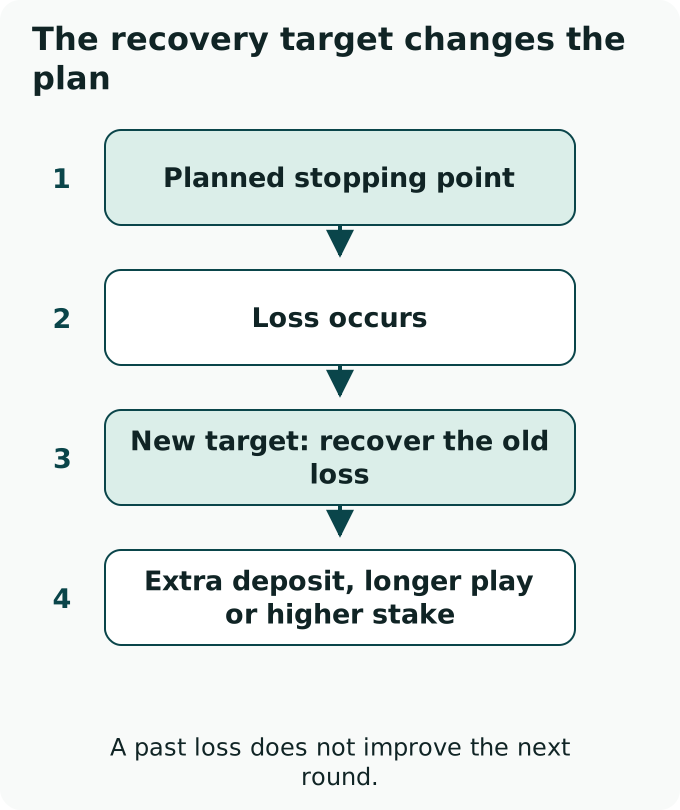
Increasing bets is one form of chasing. Playing for longer at the same stake, returning later to recover yesterday's loss or cancelling a planned stop can serve the same recovery target. Look at the reason for the next action, not only its size.
A losing session alone does not establish chasing. Nor does every emotional decision: tilt is the broader term for emotions disrupting play. Chasing is specifically about winning back money. On an independent game round, a previous loss does not improve the next round's chance of winning.
Stop autoplay, leave the game and end the session before making another deposit. Put distance between the recovery thought and the next payment.
Use available account restrictions, self-exclusion, blocking tools or a bank gambling block where offered. Their coverage differs; check what each tool actually blocks.
Speak with someone you trust or a gambling-support service. The responsible-gambling page explains support and restriction options without requiring a diagnosis.
A new deposit made to recover an earlier loss is a concrete decision you can identify. Calling yourself weak or a bad gambler adds no useful information. The immediate choice is whether to place that next bet or protect the stopping point.
The wider effect of emotions on decisions.
A restriction that can support a decision to stop.
Set the allocation before a loss changes the target.