

The session portion is gone
Stop the session. A remaining monthly allocation is not a reason to reload the finished portion.
Money terminology
A bankroll is the money you deliberately set aside for gambling. It is a budget you can lose without taking money from living expenses or other commitments. It is not the same as the balance displayed in a casino account.
| Number | Meaning |
|---|---|
| Bankroll | The total allocation set aside for play across the period you chose. |
| Session limit | The part of that allocation available for a particular visit or session. |
| Casino balance | The amount currently recorded in the playing account, which may include funds subject to bonus restrictions. |
Betting turnover is another measure: it adds up stakes, including money wagered again after a win. It does not tell you how much new money you deposited.
Suppose you set aside $120 for a month and divide it into four separate $30 session portions. Those are illustrative amounts, not a recommended gambling budget. Decide the total and the session boundary before opening a game.
You deposit the first $30. If it is lost, that session's allocation has gone. The other $90 remains outside the casino for the later portions you already planned. Moving another $30 into the same session would change the limit you set, even though the total monthly allocation had not yet been used.
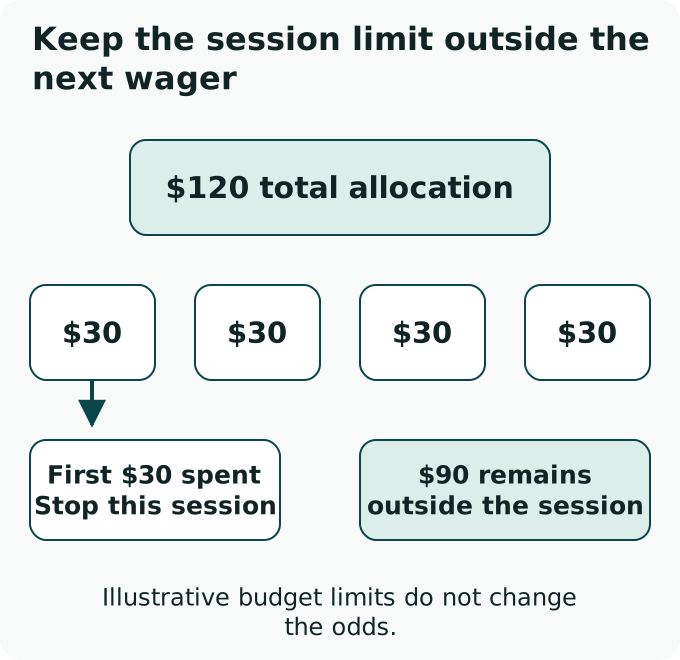
Stop the session. A remaining monthly allocation is not a reason to reload the finished portion.
Record what came back and decide whether to leave it outside play. A withdrawal does not oblige you to increase the next stake or deposit.
Keep it out of the bankroll. Borrowing or using money for bills changes the meaning of a discretionary allocation.
Budgeting can make the amount at risk visible. It cannot remove the house edge or guarantee that a balance lasts for a particular number of sessions. Volatility also means a run of results can be uneven.
There is no universal stake percentage that makes casino play safe or profitable. The practical distinction is between a limit chosen beforehand and a new deposit made because the earlier money has gone. That second motive can become chasing losses.
The game's mathematical advantage.
Why short runs of results can vary sharply.
When recovering earlier spending becomes the next target.