

The stake changes impulsively
Leave the game before confirming the larger wager. Do not rewrite the limit in the middle of the emotional reaction.
Gambling language
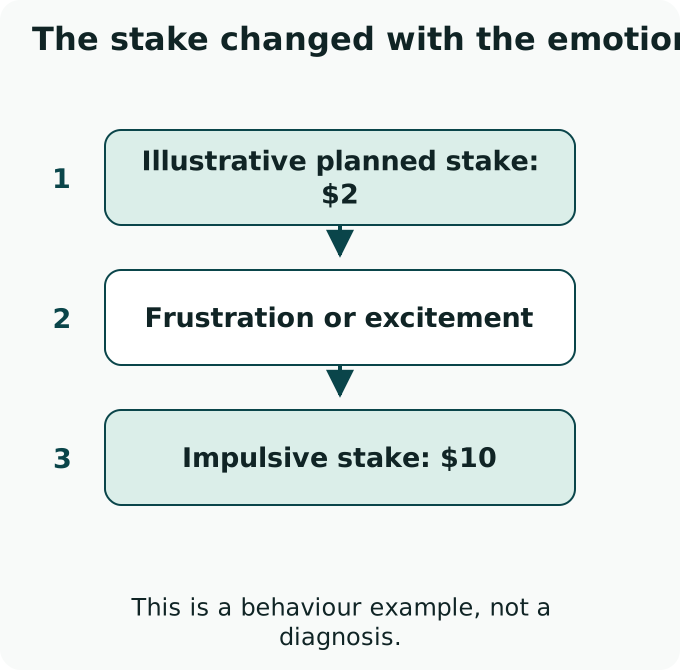
Tilt describes a state in which emotions disrupt the decisions you meant to make while gambling. Frustration is a familiar trigger, but excitement or boredom can also change stakes, speed or stopping choices. It is a description of behavior, not a medical diagnosis.
| Before play | After the emotional change |
|---|---|
| Choose a $2 stake. | Raise it to $10 immediately after a frustrating result. |
| Stop at the chosen time. | Continue because leaving feels unsatisfying. |
| Read the rule before activating an offer. | Accept it impatiently to get back into a game. |
These are hypothetical contrasts, not a test that diagnoses tilt. The useful clue is that the later decision was driven by emotion instead of the plan.
A win can lead to a bigger stake or faster play that you had not planned. Boredom can prompt a switch to higher stakes just to make the session feel more intense. Tilt does not require a losing balance.
A poor decision alone is also insufficient to explain its cause. The term is most useful when you can identify both the decision that changed and the emotion pushing it. Knowing that you feel frustrated is a reason to pause; it is not evidence that the next outcome will be better.
Leave the game before confirming the larger wager. Do not rewrite the limit in the middle of the emotional reaction.
Stop autoplay or rapid betting and end the session. Repeated clicks make it easier to miss how much the plan has changed.
Log out and use a time-out or other account restriction if that helps you keep the decision to stop.
If frustration makes you bet more specifically to recover an earlier loss, the behavior is also chasing losses. If excitement after a win makes you abandon a stake limit, tilt can describe the change without a recovery target.
Calming down does not turn casino play into a profitable strategy. A bankroll defines the money allocated for play; an emotional state cannot change the game's odds. If keeping limits is repeatedly difficult, the responsible-gambling page covers restrictions and support.
The specific target of recovering earlier money.
The allocation and limits chosen before play.