

Payment terminology
What is a casino chargeback?
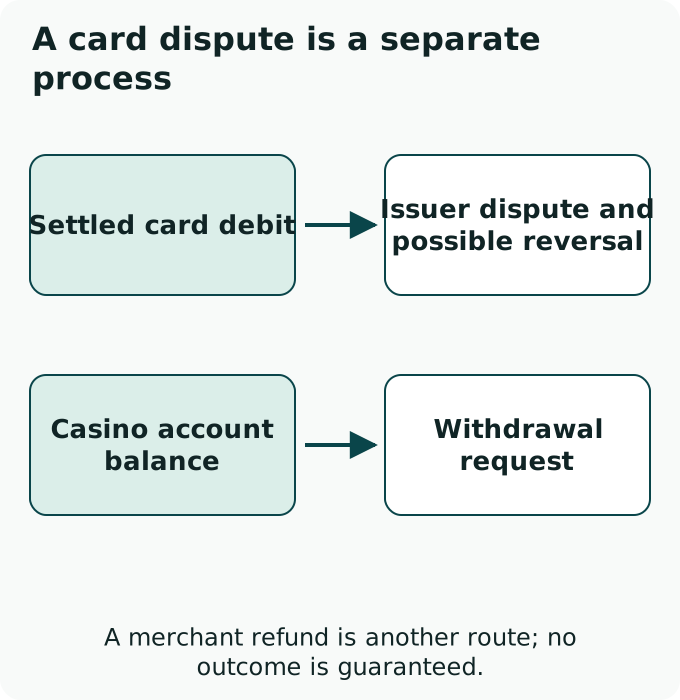
A casino chargeback is a reversal of a card payment through the card issuer's dispute process. It concerns a specific transaction, such as a deposit charged twice. It is separate from a casino refund or a withdrawal from your playing balance.
The disputed payment needs a reason
People also use chargeback to mean the request that starts this process. A request still needs review: the issuer may ask for records, and the merchant can respond. The available grounds and deadlines depend on the issuer, card network and circumstances.
Losing an authorized bet does not, by itself, make the original deposit unauthorized. Describe what happened to the payment accurately. If you do not recognize a card charge, report that promptly through your bank's official app, website or the contact details on your card.
Three different money movements
| Term | What it concerns | Who handles the request |
|---|---|---|
| Chargeback | A disputed card transaction, potentially reversed through the card network. | The card issuer, with the merchant able to respond. |
| Casino refund | The merchant returning a payment or correcting a charge. | The casino or its payment provider. |
| Withdrawal | Money being paid out from the casino account balance. | The casino's withdrawal process. |
An overdue withdrawal needs its own payment reference and status. It does not automatically establish a reason to reverse the earlier deposit.
An illustrative duplicate-deposit example
- The deposit
One intended payment
You authorize a $50 deposit and the casino credits $50.
- The statement
Two settled debits
Your card statement shows two separate $50 charges. First check that neither is merely a pending authorization.
- The query
Trace the extra charge
Ask the merchant to identify or correct the second transaction. If it remains disputed, give the issuer both statement entries and the merchant's response. The issuer determines whether the dispute can proceed.
Keep the payment record together
Identify the charge
Save the settled statement entry, date, amount, currency and merchant description. Keep the full card number private.
Match it to the account
Retain the deposit receipt or transaction ID and the balance history relevant to that payment.
Keep the response
Save the support conversation and any refund reference. Give the issuer the actual sequence instead of relabelling an authorized deposit as fraud.
Credit can be temporary; account access can change
Continue with the question that matters
- Cashout
Why taking money out is a different transaction.
- Deposit not credited
Trace a payment that has not reached the playing balance.
- Withdrawal guide
Follow the payout process and its records.