

Streaks and variance
Heater: a good run describes what has happened
A heater is gambling slang for a favorable streak, often called running hot. It describes recent results, not an advantage you can carry into the next bet. There is no fixed number of wins or amount of profit that turns a run into a heater.
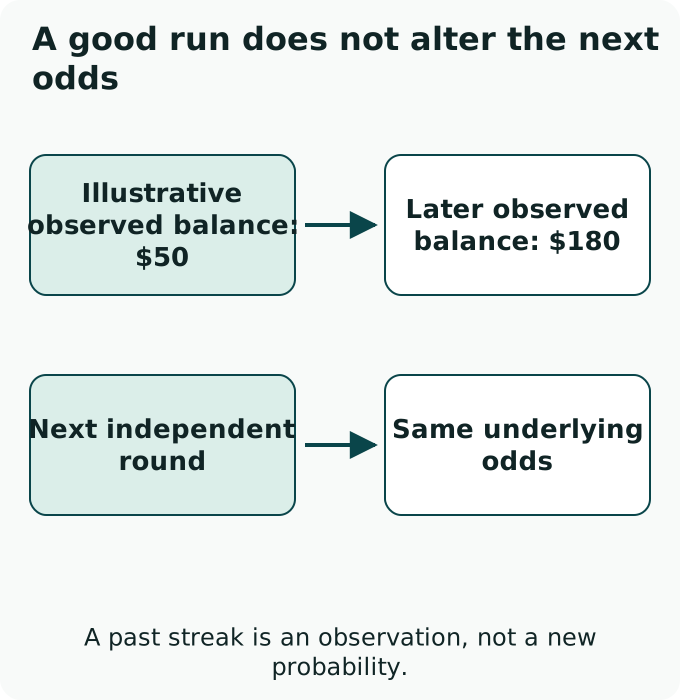
What a rise from $50 to $180 tells you
In an illustrative session, a player starts with $50 and reaches $180 after a series of wins and losses. Calling it a heater says the sequence has been favorable overall. It need not mean that every spin won, or that the player found a method for repeating the result.
The balance is $130 above the starting amount. Whether that $130 is available to withdraw depends on the funds and any attached conditions. The word heater tells you nothing about those conditions.
Neither another win nor a correction is due
The next stake is a new decision
At $180, the practical question is how much of that balance you want to leave exposed to further play. Money won in earlier rounds has value just as deposited money does. Calling it house money does not reduce the loss if you bet it and it disappears.
A larger balance can fund a larger bet, but it does not make that bet safer. Choose what to retain or withdraw before increasing stakes. That choice controls the amount at risk; it does not improve the game's expected return.
Poker uses the word too
A poker heater can involve favorable cards and outcomes over many hands. Poker decisions also depend on opponents, position and the current hand, so the independent-round explanation is not a rule to ignore new table information. Recent luck itself is not that information.
You may hear someone say they are trying to run it up. That describes a balance-growth goal or result. A heater describes the favorable stretch along the way; neither phrase establishes a profitable strategy.
Continue with the question that matters
- A balance target is a different idea
Separate an attempt to grow money from a favorable streak.
- How the game advantage works
A session result does not rewrite the underlying return.
- Browse casino terms